
2 September 2026 · Mark Stent
Deload Week: What It Is, When to Take One, and How to Do It Right
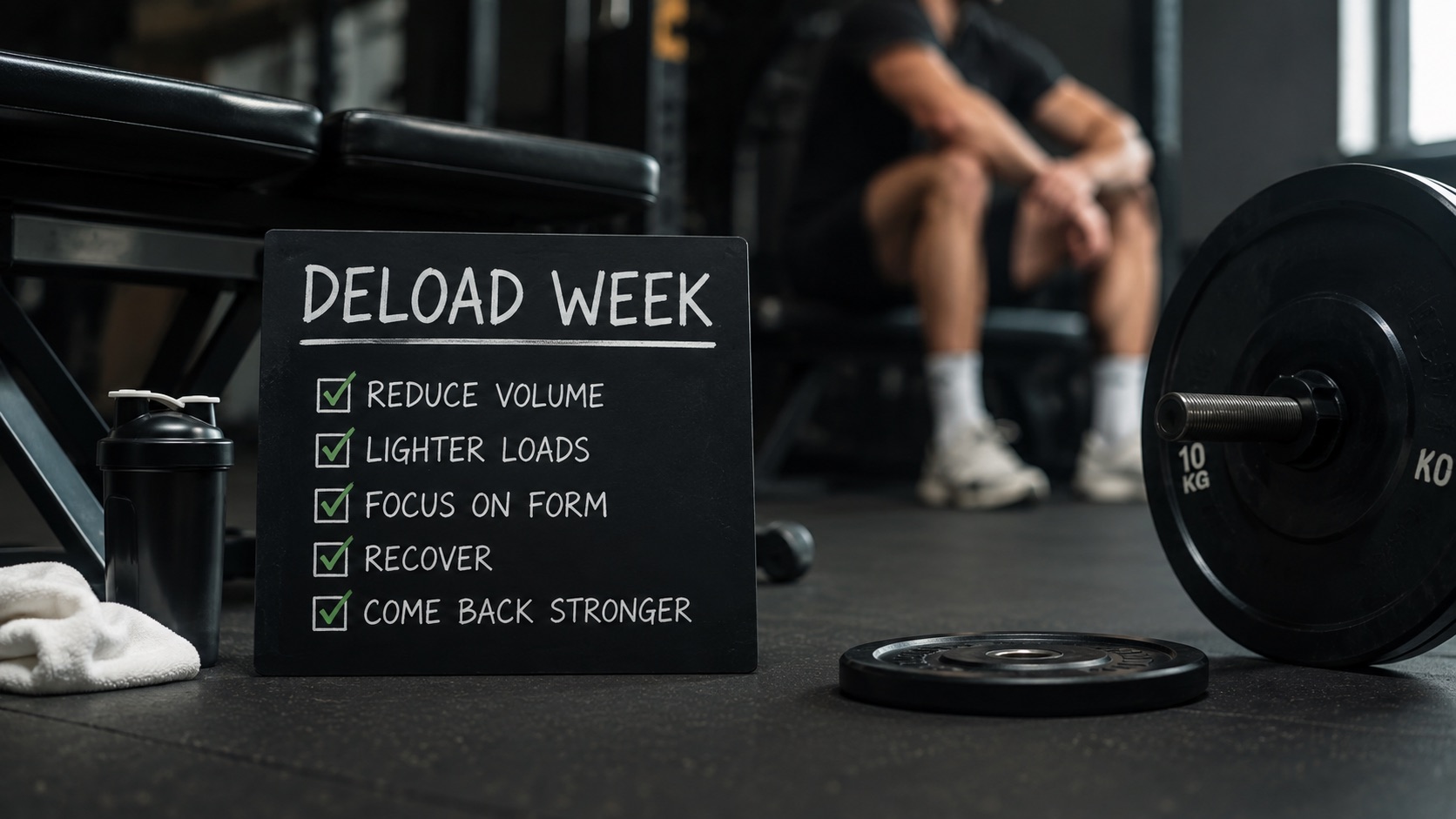
A deload week is a planned easy week of training - lighter weights, less volume, or both - that lets accumulated fatigue clear so you come back stronger. It is not time off and it is not a sign of weakness. It is scheduled maintenance, and skipping it is why a lot of good runs end in a stall or a niggle instead of a personal record.
Take one roughly every 4 to 8 weeks, or the moment your numbers, sleep, or joints start telling you fatigue has piled up faster than you are clearing it.
What is a deload week?
Over weeks of hard training, fatigue accumulates faster than you fully clear it between sessions. For a while that is fine - you are fitter than you are fresh, so your numbers still climb. But eventually the fatigue masks the fitness, progress flattens, and pushing harder only digs the hole deeper.
A deload strips back the training stress for a week so your body catches up on recovery. The fitness you built stays; the fatigue burns off. You come back the following week fresher, and usually stronger than before you backed off.
Think of it as the difference between resting a muscle for 48 hours between sessions and resting your whole system for a week between blocks. Same idea, longer timescale.
When should you deload?
There are two ways to decide, and the better lifters use both.
On a schedule (proactive). Plan a deload every 4 to 8 weeks of hard training. Newer lifters and lighter programs can go longer between deloads; advanced lifters lifting near their limit need them more often. Proactive is best because you deload before you are forced to.
On the signals (reactive). Take one now if you are seeing:
- Strength going backwards on lifts that were climbing
- Soreness that never fully clears between sessions
- Nagging joints, poor sleep, low mood, or lost appetite
- Dreading sessions you normally enjoy
If several of those show up at once, do not push through - that is exactly the wall a deload exists to prevent. If you have already hit it, how to break a lifting plateau covers the way out.
How to do a deload week (two methods)
You do not stop training. You reduce the stress. There are two levers - intensity (the weight) and volume (the sets) - and you pull one or both.
| Method | What you cut | What you keep | Best for |
|---|---|---|---|
| Reduce weight | Load to ~50 - 70% of your working weights | Same sets and reps, moving fast and clean | Feeling beaten up, joints or CNS fried |
| Reduce volume | Cut sets by ~40 - 60% (e.g. 5x5 becomes 2x5) | Near-normal weight on fewer sets | Feeling flat but joints are fine |
A simple, reliable default: keep the same exercises, drop the working weight to about 60% of normal, and cut your sets by roughly half. Every set should feel easy and crisp. If a deload set feels like a grind, you have gone too heavy.
Keep the week to about 5 to 7 days. Then return to your previous working weights - or slightly below and build back up over a session or two - not straight to a new personal record attempt.
What a deload is not
- Not a week off. Movement helps you recover better than lying on the sofa. You still train; you just train easy.
- Not an excuse to add junk. Do not fill the freed-up energy with extra accessory work. The point is less stress, not redistributed stress.
- Not a diet. Keep eating and sleeping well - a deload is when a lot of the catching-up actually happens, and under-eating during it defeats the purpose. See sleep and muscle growth.
- Not a loss of progress. A week at 60% does not shrink your muscles or your strength. You keep the fitness and shed the fatigue.
Deloads and training volume
The more training volume you run and the closer you train to failure, the faster fatigue accumulates and the more often you need to back off. This is why high-volume, high-intensity programs bake in a deload every few weeks by design. If your program does not have one written in, add it yourself - roughly every fourth to eighth week - rather than waiting for your body to schedule it for you with an injury.
How Setkord helps you spot when to deload
The hardest part of deloading is noticing you need to before your body forces it. Setkord is built to make that call for you:
- Fatigue and plateau signals (Insights, Pro) flag when a lift is trending down or a muscle group is getting hammered week after week - the cue to pull back.
- Your strength trends are charted over time, so a plateau shows up as a line flattening instead of a vague sense that "sessions feel harder lately".
- Full training history means you can see how long it has actually been since your last easy week - not how long it feels.
- A built-in rest timer and fully offline logging keep your deload week as easy to run as any other, and it is free forever at the core.
You train hard; Setkord tells you when it is time to coast for a week.
FAQ
How often should I deload? Roughly every 4 to 8 weeks of hard training, or sooner if the warning signs pile up. Newer lifters and lighter programs can wait longer; advanced lifters training near their limit need them more often.
Will I lose muscle or strength during a deload? No. A week of reduced training does not shrink muscle or strength - you keep the fitness you built and lose only the accumulated fatigue. You almost always come back stronger.
Should I still eat normally during a deload? Yes. Keep eating and sleeping well. A deload is when much of your recovery actually catches up, so under-eating during it works against you.
What is the difference between a deload and a rest week off? A deload keeps you training but easy - lighter weights or fewer sets. Total time off works too, but light movement generally helps you recover and return better than doing nothing.